Marking the time: Festivals in Roman and Byzantine Egypt University of Amsterdam, 8th of October 2026
This informal workshop explores the festive culture in Roman and Byzantine Egypt in order to gain a better understanding of the rituals, the social background and religious identity of the participants, the times at which festivities took place and the transformations they underwent.
Some questions that are central to our research project are: How do the dates of new Christian festivals relate to or interact with the dates of older feasts? In what aspects can we see the Roman and Graeco-Egyptian influence on the later Christian festive calendar, in a multicultural place such as Egypt? To what extent were festivals used strategically in the shaping of group identity? What role does the recurring festive custom of gifts play in this transitional phase? And what can we say about who actually celebrated specific festivals and feasts?
By bringing together scholars working on different periods and different source types, we want to get a better grasp on long-term continuity and change, as well as reflect on methodological challenges: how can we fully use the broad scope of available source material, what are the limitations and biases of the evidence and how can these be overcome?
Program
Bushuis D2-04 (Kloveniersburgwal 48)
9.30 – 10.00
Welcome and introduction
10.00 – 11.00
Elena Chepel (Vienna) – Good days, bad days: festivals, divination, and auspicious times
11.00 – 11.15
Coffee break
11.15 – 12.15
Harald Buchinger (Regensburg) – Alexandria: a latecomer in the development of the liturgical year?
Lunch
PcHoofthuis 3.19 (Spuistraat 134)
13.30 – 14.30
Sofie Remijsen (Amsterdam) – Astrological, Jewish and planetary weeks
14.30 – 15.30
Elsa Lucassen (Amsterdam) – Retainingthefestive rhythm: Serapeia, Easter and the Feast of Pharmouthi
15.30 – 15.45
Coffee break
15.45 – 16.45
Ágnes Mihálykó (Vienna) – Hymns, calendars, and vigils: what the liturgical sources from Egypt tell us about the evolving Christian calendar
16.45 – 17.00
Closing remarks
If you would like to attend and join us for lunch, please send an email to e.a.lucassen@uva.nl.
In the project database conversions of dating formulae in edited texts are automatically checked against extensive chronological tables. This process occasionally brings to light calculation errors in leap years or discrepancies based on an outdated understanding of when the indiction year started, which has resulted in an article with corrected dates for Coptic documents and tombstones by Sofie Remijsen and myself (2023). In a previous blog, I proposed an earlier year of death for Bishop Pesynthios of Koptos. The present blog focusses on the date of a festive ceremony following the renovation of the church at the Monastery of Pbow, the main monastery of the koinonia founded by Pahom (better known as Pachomius). After the second enlargement of the church in the second half of the fifth century, it was dedicated to Pahom, who was by then commemorated as a saint.
The dating of the event to 459 CE is based on A. van Lantschoot’s combined reading of two passages in the Arabic version of a homily attributed to Timothy II Aelurus, anti-Chalcedonian Patriarch of Alexandria (457-460, 475-477). He converted one of the mentioned dates – Saturday Hathor 11 – to November 7 (the usual Julian day in a common year) and found out that November 7 fell on a Saturday in 459. The problem is that once every four years, November 7 equals Hathor 10, because the leap day is introduced in the Egyptian calendar six months before it is introduced in the Julian calendar. Consequently, Hathor 11 in 459 actually corresponds to Sunday November 8, which makes it necessary to look for another date that matches all the details. Here, the chronological information in the Lived Time project database comes in handy. For this reason, this blog briefly discusses the relevant passages in the sermon, clarifies Van Lantschoot’s argument for accepting Patriarch Timothy’s period of office as the likely timeframe and proposes alternative dates.
The homily on the Church of Pahom is partly preserved in Sahidic, but the details mentioned above only appear in a complete Arabic manuscript, Vatican arabe 172, which is dated by a colophon to 1345 CE. Van Lantschoot published the text together with a French translation (pp. 26-56). The text is presented as a homily to be delivered on Pahom’s feast day, i.e. Pachons 14, which corresponds to May 22 in common years (see fol. 105b).
The first relevant passage appears in the introduction (fol. 99a): “This dedication took place on the fifteenth of the month Hathor”. The second one describes a meeting between Patriarch Timothy and abbot Martyrios at the Monastery of Pbow on “Saturday, Hathor 11” (fol. 106a). The former proposed to consecrate the renewed church the next day, on the feast day of the Archangel Michael (Hathor 12), but that night, an angel appeared and told him to wait until Hathor 15.
The ceremony is set at the time of Emperor Leo I (457-474; fol. 103b), Patriarch Timothy II and Abbot Martyrios, who finished the renovation of the church that one of his predecessors, Victor (attested in 431), had started. Van Lantschoot (pp. 16-17) observes that the attribution of the sermon to Patriarch Timothy is unlikely, for the many references to the Pachomian tradition and the use of literary devices to glorify the church at Pbow indicate that the sermon was composed by a Pachomian monk. However, he accepts Timothy’s period of office as the timeframe within which the event took place, arguing that the association with this patriarch instead of a successor or predecessor must have historical significance (pp. 20-21). In general, the dedication of a church is such an important event – particularly in a monastic context – that it is celebrated with an annual feast, resulting in a tradition in which historical details are repeated every year (p. 22). The mention of Emperor Leo I supports a date in the period 457-474 as well. According to the sermon, Abbot Martyrios contacted him shortly after his ascension to the throne, when the imperial measures against the anti-Chalcedonian church of Alexandria ceased, which suggests a date around 460.
On the basis of the two passages, Van Lantschoot concluded that the ceremony took place on November 11 (the usual Julian day coinciding with Hathor 15 in common years) and that Hathor 11, or November 7, fell on a Saturday in 459, which fits with Patriarch Timothy’s chronology: in January 460, he was exiled to Gangra (in modern Turkey), on account of his alleged complicity to the violent death of Proterius, the Chalcedonian Patriarch of Alexandria. Van Lantschoot did not check for other possible dates, for instance, in the period after Timothy’s return to Alexandria (475-477). Later scholars explicitly mention 459 as the year in which the church in Pbow was dedicated, notably S. Timm (1984, 949) and P. Grossmann (1991, 1928; 2002, 60 and 552).
However, since Saturday November 7, 459 was actually Hathor 10, we should look for alternative dates. Within the period 457-777, Hathor 11 fell on a Saturday in 464, 470 and 475. Consequently, the dedication on Hathor 15 possibly took place on Wednesday November 11, 464 or 470, or on November 12, 475. At first glance, the third date seems preferable, for it coincides with Patriarch Timothy’s later years, when he could have travelled to Pbow, but it was Emperor Basiliskos (475-476) who allowed him to return, whereas the sermon links the ceremony to Emperor Leo I.
In that case, 464 is more likely (closest to the date when Abbot Martyrios supposedly contacted Emperor Leo I), even if it means that Patriarch Timothy could not be physically present during the festivities. In fact, his presence was not required, since the bishop of Nitentori (Dendera) could oversee ceremonies in his diocese, but the composer of the sermon wanted to emphasise the importance of the church at Pbow and that of the anti-Chalcedonian Church. Therefore, he took much poetical licence, stating that the monastic church was already blessed by Jesus Christ on the eve of the dedication and that 824 bishops from Egypt and abroad attended the festivities.
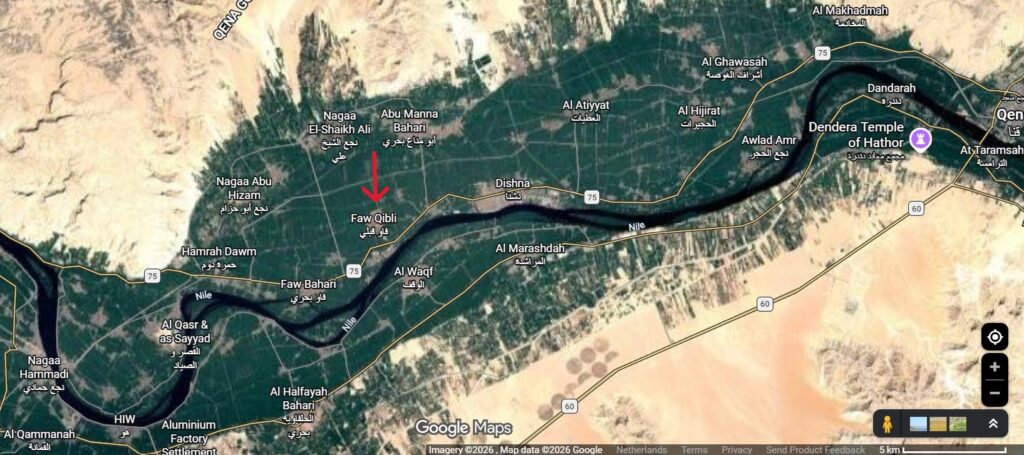
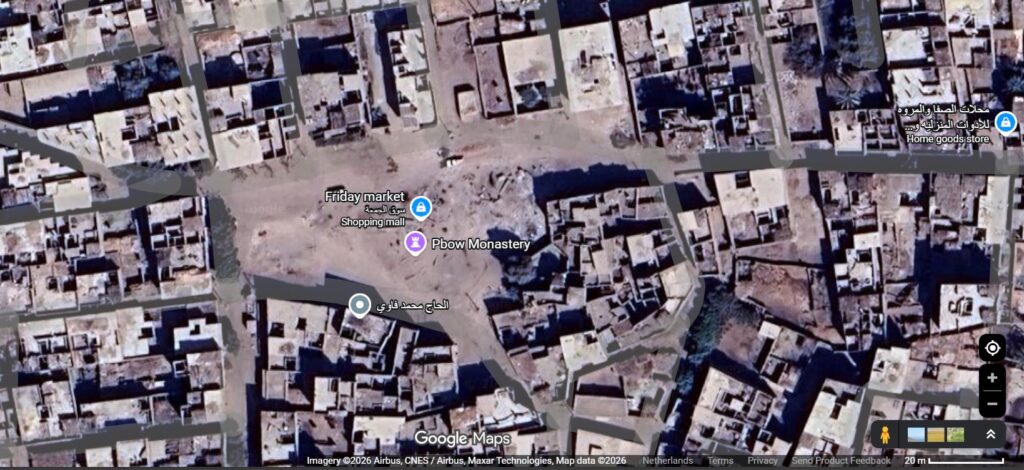
Although the most likely alternative date – November 11, 464 – is hypothetical, the revision is significant for three reasons. Firstly, it demonstrates the value of a date checking tool or perpetual calendar (Bagnall and Worp 2004, 171) for the conversion of dates including a weekday, for any proposed date is likely to be repeated without being checked. Secondly, a slightly later date for Abbot Martyrios affects the chronology of the Pachomian leaders at Pbow and the Pachomian koinonia in general. Lastly, the date is relevant for the history of a building that no longer exists today. P. Grossmann, who has published ground plans showing the three building phases of the church, connects the dedication ceremony to the third phase, when the enlarged church measured 75 × 37.5 m (pp. 59-60, 551-552, Fig. 163). The remains of this monumental building, including granite columns and capitals, now lie scattered in an open space between the houses of the modern village of Faw al-Qibli, where the market is held on Fridays (Figs 1 and 2).
Renate Dekker
Fig. 1 The area of Faw al-Qibli (Google Maps)
Fig. 2 View on the remains of the church (Google Maps)
Bibliography
Grossmann, P. 1991. ‘Pbow: Archaeology’, in: A.S. Atiya (ed.), The Coptic Encyclopedia, vol. 6, New York, 1927-1929 (online).
Grossmann, P. 2002. Christliche Architektur in Ägypten, Leiden.
van Lantschoot, A., ‘Allocution de Timothée d’Alexandrie prononcée à l’occasion de la dédicace de l’église de Pachôme à Pboou’, Le Muséon 47 (1934), 13-56 (online).
Spanel, D.B. 1991, ‘Timothy II Aelurus’, in: A.S. Atiya (ed.), The Coptic Encyclopedia, vol. 7, New York, 2263-2268 (online).
Timm, S. 1984. Das christlich-koptische Ägypten in arabischer Zeit, vol. 2, Wiesbaden, 947-957.
In Greek papyri from Egypt, we find two standard meals: the ariston and the deipnon. These daily meals were eaten in this order and are hence conventionally translated as ‘lunch’ and ‘dinner’. Dictionaries will also give the option of translating ariston as ‘breakfast’, but this mostly refers to the early archaic period, when the ariston was eaten in the early morning and the deipnon at midday. Meaning had shifted by the end of the archaic period, however, just as the French déjeuner (litt. ‘breaking the fast’) once referred to breakfast but now means lunch. All papyrological evidence long postdates this shift in meaning.
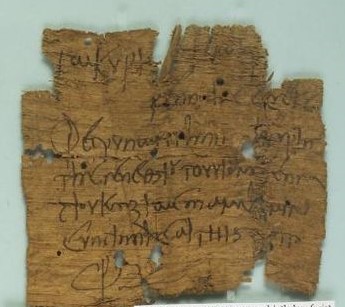
In this blog, I want to focus on these meals in an account from the fifth century CE: P. Wash. Univ. II 98. This short document lists the daily expenditure of wine for consecutive days. I copy here the text of lines 5-7 from the edition (the only lines specifying meals) and translate them:
Day 2: for ariston (and) deipnon: 2 jars Day 3: for ariston (and) deipnon: 2 jars; for deipnon: 1 jar
The observant reader may find something odd: why would the accountant give a combined amount of wine for lunch and dinner for day 3 and then an additional amount for dinner on the same day? The more logical practice would be to either separate the count for each meal, or to give only a combined amount.
The problem lies, I think, not with the accountant, but with the reading. The scribe wrote ‘ar. dipn.’ for day 2 and ‘aristodipn.’ for day 3: for each point in the transcription there is an abbreviation sign in Greek. There is no additional abbreviation mark suggesting the ‘and’ implied by the text of the edition. Therefore, I think that on both days, jars of wine were in fact served with an aristodeipnon, a ‘dinner eaten at lunchtime’.
The term aristodeipnon is extremely rare, but not out of place in a late-antique context. It is also attested in the chronicle of Malalas (18.474 (71)); he mentions an aristodeipnon for military heroes hosted on 13 January, 532 CE by emperor Justinian in his palace. Further confirmation that ‘dinners at lunchtime’ also make sense in the context of fifth-century Egypt is provided by P. Oxy. IX 1214. This is an invitation to ‘dine’ at the seventh hour, that is very shortly after midday and thus too early for a normal elite deipnon – served at the ninth hour in the high Empire, but moving somewhat later again in late antiquity.
The temporary fashion of aristodeipna or ‘dinners at lunchtime’ fits in the context of a late-antique overhaul in meal times. Up until the fourth century, the deipnon was the standard ‘main meal’. Public banquets, an important aspect of sociability in the ancient world, always revolved around the deipnon. In an upcoming article on the temporality of meals in Roman and late-antique Egypt, I argue that, from the fourth century onward, the ariston accrued a social function as well. At the same time, important features of the culture of commensality connected to the deipnon declined in the fourth century, as the cult associations which had organized public banquets disappeared, as did many festivals which had featured them. Other scholars, such as Hudson, have already argued that the end of public banquets coincided with a transformation if HOW people dined, namely with a decline of eating while reclining on couches. I would like to add that it also changed WHEN people dined. From the fifth century on, the ariston became the main meal. In late-antique papyri, it would therefore be more accurate to translate ariston and deipnon as ‘dinner’ and ‘supper’ than as ‘lunch’ and ‘dinner’. Aristodeipna belonged to the intermediate phase in which the ariston had in practice already become the main meal, but people still remembered that to banquet was ‘to eat deipnon’. Once this faded from living memory, the combined word aristodeipnon once again became unnecessary.
Sofie Remijsen
References:
Sofie Remijsen, ‘Lunch and Dinner? The Temporality of Meals in Roman and Late-Antique Egypt’, forthcoming.
Hudson, Nicholas. Dining at the End of Antiquity. Class, Status, and Identity at Roman Tables. University of California Press, 2024.
This summer the 31st Papyrological Conference was held in Cologne from the 28th of July until the 2nd of August. As this conference is organized only once every three years, this was the only occurrence within the time limits of the Lived Time project, so the team was well represented by Sofie Remijsen, Kevin Hoogeveen, Elsa Lucassen and former colleague Eugenio Garosi. We all presented papers on our current research and Sofie Remijsen introduced the project in a more general manner with a separate talk as well.
In ‘Weekly rhythms of late-antique life’ Sofie Remijsen considered when weekly rhythms started to make an appearance in the papyrological sources, using the precisely dated papyri from the project’s database to make graphs that illustrated this development. One feature she explored in particular was the role of the Sabbath in fourth and fifth century CE.
Elsa Lucassen’s spoke on festive gifts, such as heortika and kalandika in her paper ‘Follow the gifts: blurring lines between festivals from the perspective of gifts’. These formalized gifts appear to stem from an Egyptian tradition, reinforced by Roman customs of giving and continued under the guise of Christianity.
In ‘The rural history of Byzantine Egypt (284-642 CE) from below’ Kevin Hoogeveen introduced his own PhD project, on how mobility might be a way to study how the rural population of Egypt co-shaped the societal developments.
We were eager to see how other scholars are examining aspects of temporality. Eward Tang, for example, combined the team’s interests in temporal pattern and mobility in his paper ‘The shape of moving letters: seasonal mobility and the Oxyrhynchus Papyri’. Petra Sijpesteijn (‘Counting and dating in Arabic papyri’) discussed where exactly we can locate the innovative character of the new Muslim calendar and era. Ágnes Mihálykó’s talk on ‘Feasting after the Eucharist: Agape meals in Late Antique Egypt’ demonstrated how traditional customs influenced these early Christian gatherings, aligning well with Elsa Lucassen’s research into the continuity of traditional practices in new Christian guises. In ‘Food, gifts and festivals: New edition of P. Ross. Georg. II 41’ Elena Chepel likewise brought up many topics essential to Elsa’s research.
Many international colleagues presented editions of unpublished texts, several of which turned out to be of interest for the project. Maria-Jesus Albarran Martinez (‘The materiality of the Bawit papyri: Format of delivery orders’), for example, showed unpublished Coptic ostraca that mentioned a bonus of some sort given at Easter. Susan Fogarty (‘Contract for the services of a wet-nurse’) presented an unpublished contract of a wet nurse that includes a heortika-like stipulation for the Amesysia festival. We look forward to further developments and publications! After five intense days of listening to interesting papers, meeting fellow researchers of the papyri and history of Roman and late-antique Egypt, discussing questions, making plans for future projects, sightseeing in Cologne and enjoying many nice meals, we were thoroughly inspired and more than ready to start our actual summer vacation.
In the fourth SUMMER SPECIAL of the podcast series Oudheid (“Antiquity”), Elsa Lucassen tells us about her PhD research on the changing festival calendar in Late Antique Egypt (published online on July 23, 2025).
Elsa examines the feasts that were celebrated and discusses the question whether a common festival calendar existed for everyone or whether there were multiple.
Begin juni was projectleider Sofie Remijsen te gast bij de podcast Oudheid van Timo Epping. In twee afleveringen sprak zij over tijd in de Oudheid. De aflevering van 4 juni over kalenders, de week en het ritme van het leven is hier te beluisteren. De aflevering van 8 juni over de uitvinding van het uur is hier te beluisteren.
Early June, principal investigator Sofie Remijsen spoke about time in Antiquity on Timo Epping’s Dutch podcast on Antiquity. The episodes of 4 and 8 June are found by following the links in the above.
From Tuesday 26 November to Thursday 28 November 2024, we will host an international conference in Amsterdam. The conference Lived Time: Routines, Temporal Norms and Identities from Antiquity to the Modern World will feature presentations by 20 international scholars, including On Barak, Matthew Champion, Ignace Glorieux, Uta Heil, James Ker and Brigitte Steger.
On 17 May 2024 a conference on Urban times will take place at Bonn University, with contributions on temporality and routines in Greek and Roman cities. The program is as follows:
9.00 – 9.15: Introduction
9.15 – 10: Tabea Meurer (Mainz), Scheduling (In-)Equality. A Re-Exploration of Athenian Chronopolitics
10.00 – 10.45: Roland Färber (Düsseldorf/München), Topographie der Zeit –Chronographie des Raums. Das Beispiel der hellenistischen Polis
10.45 – 11.00 Coffee break
11.00 – 11.45: Franziska Lang (Darmstadt), Domestic times – Phos4Dtool and the affordance of daylight
11.45 – 12.30: Laura Nissin (Helsinki), In the Light of Darkness — Illuminating the Use of Space in Roman Houses
12.30 – 13.30 Lunch break
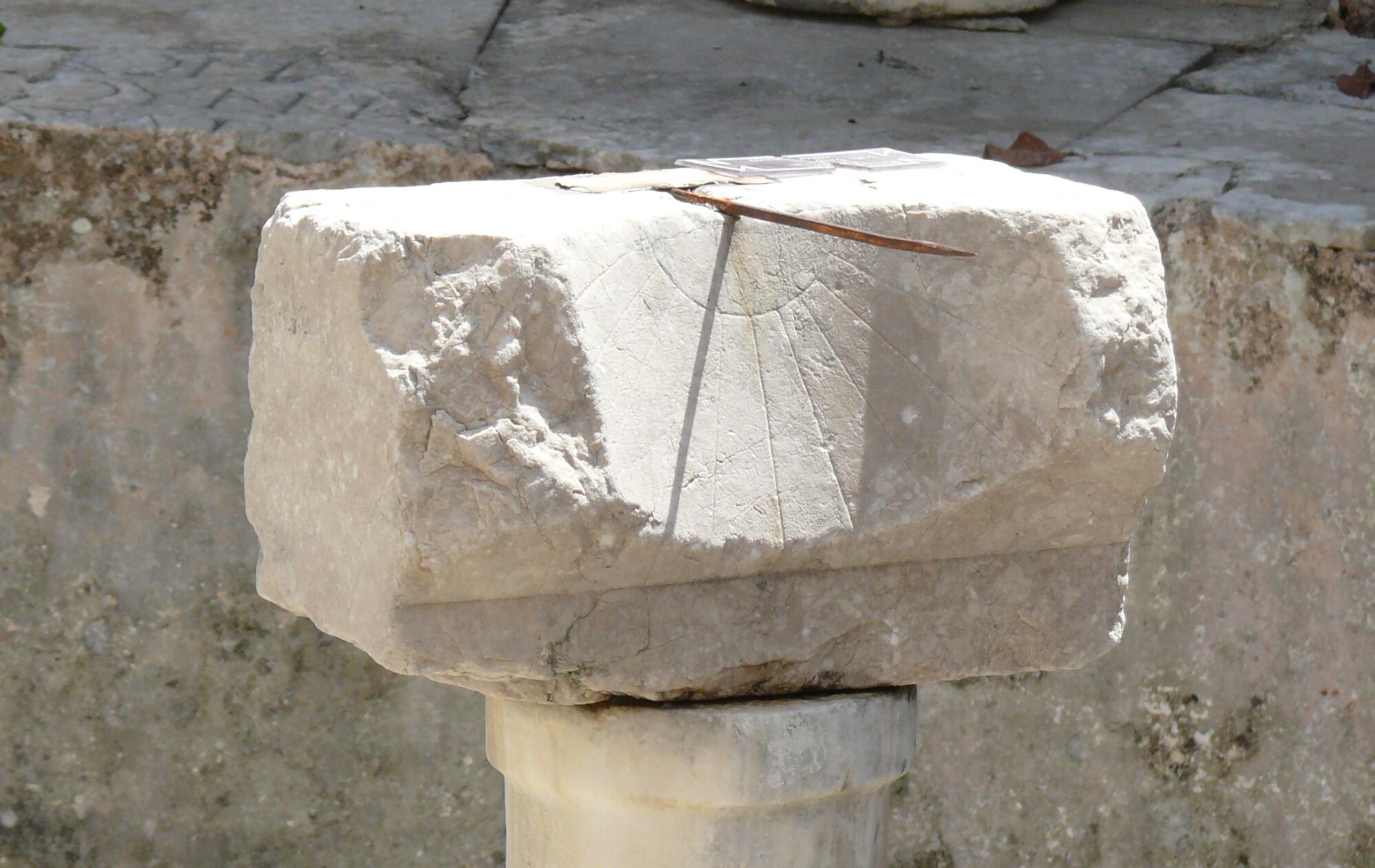
13.30 – 14.15: Adrian Hielscher (Kiel), Material Manifestations of Social Time. Sundials in Roman Cities
14.15 – 15.00 Eva Winter (Jena), Timelines and shapes of time: Regarding possible interactions of temporal aspects in ancient cities
15.00 – 15.15 Coffee break
15.15 – 16.00 Sofie Remijsen (Amsterdam), Away from urban time: How early monastic routines developed in dialogue with the worldly rhythms of the city
16.00 Concluding remarks and discussion
Guests are warmly invited. If you would like to participate in the workshop, we would be grateful for a short email to sfeuser[at]uni-bonn.de and/or S.M.J.Remijsen[at]uva.nl.
On 19 September, ancient historians, Copticists and researchers of ancient religion came together for the first project-organized seminar of the academic year. Mattias Brand (University of Zürich), in his lecture titled “Lived Religion, Multiple Identities, and Monocausality in the Historical Study of Religion\s”, argued for a situational approach to ancient religion and introduced the concept of ‘group styles’ is a helpful concept in thinking about religious practices without the pitfalls of thinking in groups as stable, easily distinguishable social entities united by a shared doctrine. Brand also broke a lance for historically contextualized comparative research in the study of religion
June 13th, Dr. Élodie Mazy (UCL) shed her light on the festival calendar in Egypt from the fifth until the eight century AD in her talk titled “Ἔργα καὶ ἑορταί: works and feasts in Late Antique Egypt”. Not only did she show how she has used Greek and Coptic papyri and ostraca to reconstruct the festival calendar, but she also expanded on the socio-economic circumstances of the celebration of these feasts. Easter, for example, was a moment to open the books and account for expenses of the past year, next to a religiously motivated feast that was preceded by fasting. Dr. Mazy’s research touched upon several topics under investigation by the project team and her talk was followed by an interesting exchange of ideas. Elsa Lucassen afterwards showed how, during the first year of the project, she has been investigating the impact of the changing festival calendar in Egypt on social cohesion in Late Antiquity. She used the Calends, Roman New Year, as case study to look at the role of festivals in changing times.